Navigating the Terrain of Fear and Anxiety: Understanding and Coping
In the complex landscape of human emotions, fear and anxiety often intertwine, yet they are distinct experiences. Understanding the difference between these two emotions is crucial for developing effective coping strategies. This article delves into the nuances of fear and anxiety, their triggers, and how we can manage them.
Understanding Fear: The Response to Immediate Danger
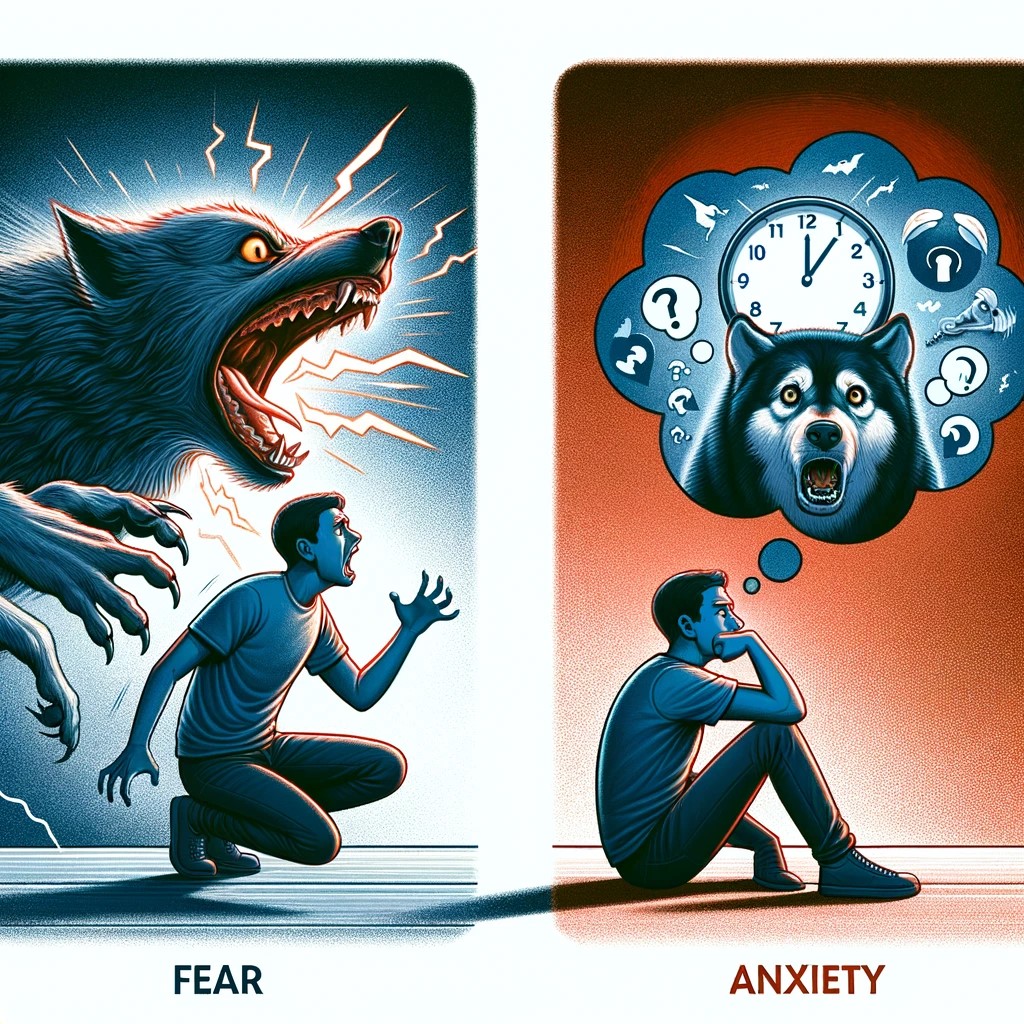
Fear is an emotional response to a clear and present danger. It’s an essential survival mechanism that triggers the ‘fight or flight’ response in the face of immediate threats. This reaction is characterized by an increase in heart rate, rapid breathing, and a surge in adrenaline. Research in evolutionary psychology suggests that fear is a primal response, crucial for the survival of species.
Anxiety: Anticipation of Future Threat
In contrast, anxiety is a response to a perceived, often future-oriented, threat or danger. It involves a sense of dread or apprehension about something that may happen. Unlike fear, which is a response to a definite threat, anxiety is often vague and can be triggered by worries or imagined scenarios. This distinction is significant in psychological research, where anxiety is seen as a response to assumed or anticipated dangers.
Example of Fear and Anxiety in Action
Consider the case of Emma. While walking home one evening, she suddenly encounters a stray dog barking aggressively. Her immediate response is fear. Her heart races, and she prepares to either run or defend herself – classic fear responses to a tangible threat.
A week later, Emma plans the same walk. This time, there’s no dog, but she feels anxious. The memory of the previous encounter triggers worry about what might happen. This anxiety is not about an immediate threat but about the possibility of encountering the dog again.
Coping Skills for Fear
When dealing with fear, the coping mechanisms are often immediate and instinctual. These may include:
- Physical Response: Such as fighting, fleeing, or freezing.
- Seeking Safety: Removing oneself from the threat.
- Rationalization: Quickly assessing the situation to determine if the threat is real.
Coping Skills for Anxiety
Coping with anxiety often requires a more nuanced approach, including:
- Mindfulness and Relaxation: Techniques like deep breathing, meditation, or progressive muscle relaxation can help manage anxiety.
- Cognitive Restructuring: Challenging and changing the anxious thoughts.
- Preparation and Planning: Preparing for potential future scenarios can reduce the sense of uncertainty that fuels anxiety.
Similarities and Differences in Coping
While both fear and anxiety can be managed through relaxation techniques and rational assessment of the threat, the key difference lies in the nature of the threat (immediate vs. anticipated) and therefore the immediacy of the coping response. Fear often requires quick, physical responses, whereas anxiety may benefit from long-term strategies like therapy, mindfulness, and cognitive restructuring.
Conclusion
Understanding the difference between fear and anxiety is vital for identifying and employing the right coping mechanisms. While fear is a response to a direct, immediate threat, anxiety is an anticipation of a potential threat. Recognizing these emotions and responding appropriately can greatly aid in maintaining emotional balance and mental health.
 Navarro Counseling