When your to-do list keeps growing, a useful starting question is: what is using the most capacity today?
Try writing down one demand, one resource you can draw on, and one adjustment that feels realistic. A demand might be a deadline, a decision you keep postponing, or the work of keeping everyone else’s plans organized. A resource might be time, clearer expectations, practical help, or a protected break.
Choose one adjustment
Reduce: Make one task smaller. Could a simple meal, shorter meeting, or good-enough first draft meet today’s actual need?
Renegotiate: Ask for a different deadline, clearer ownership, or more support where it is safe and practical to do so.
Remove: Set aside an optional task that does not need to happen today.
Recover: Protect a manageable period for something that helps you feel more restored. Notice what helps rather than assuming every kind of downtime works the same way.
You do not have to try all four. Choose one change, then briefly record what happened. Constraints such as caregiving, money, health, workplace rules, and safety can limit the options available. This exercise is a way to organize reflection, not a promise that an individual habit can fix an overloaded system.
Watch the 14-second tracker preview.
A short tracker for the next seven days
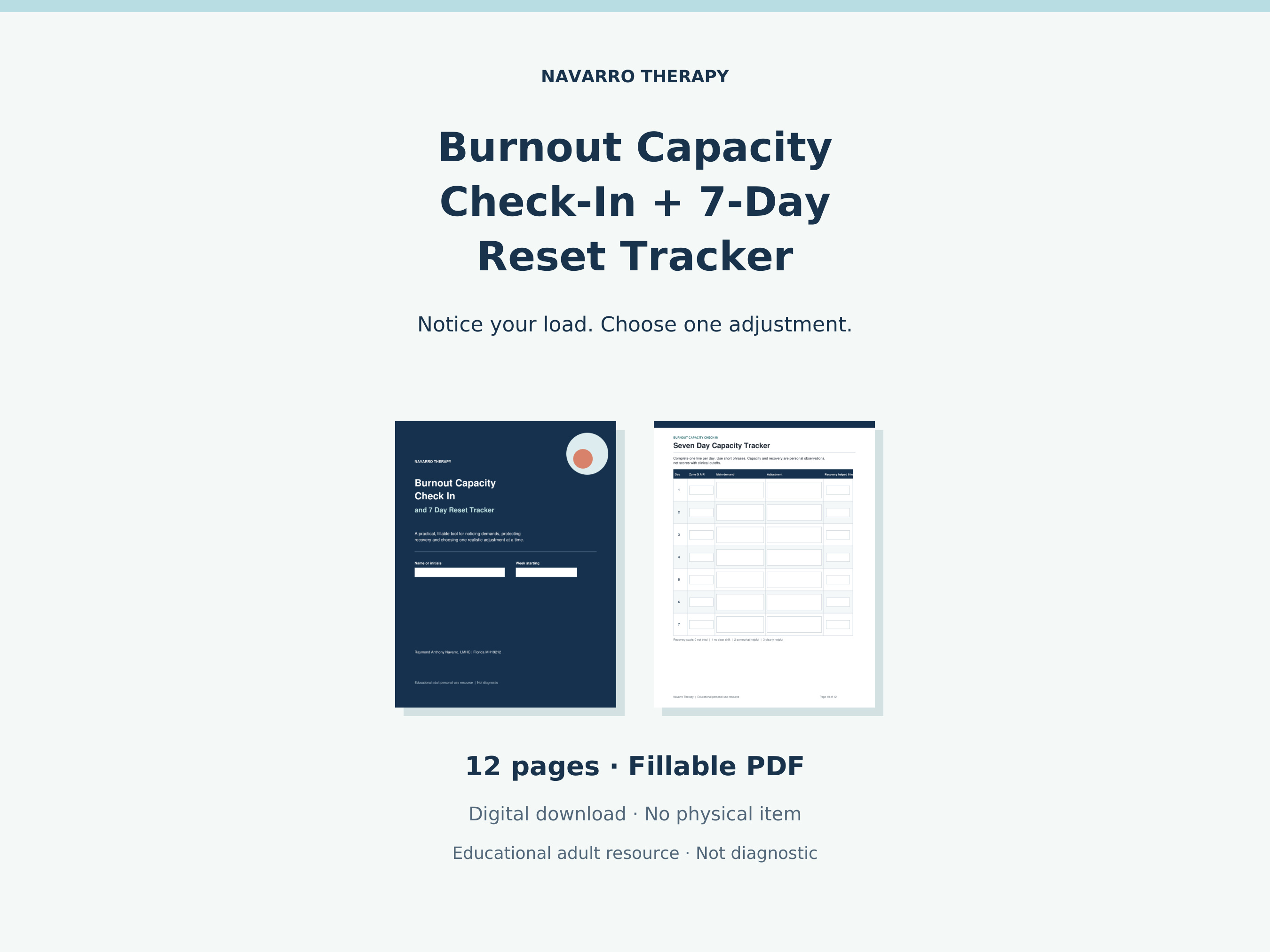
The Burnout Capacity Check-In and 7-Day Reset Tracker gives this reflection a simple structure: a two-minute daily check-in, a seven-day tracker, and a weekly pattern review. It includes space to map demands and resources, plan a minimum viable day, and choose a realistic next step.
The digital download contains 12 fillable and printable PDF pages with 104 interactive fields. Type into a compatible PDF reader and save your own copy, or print the pages you want to use. Keep your completed reflections private. No physical item is shipped.
The tracker is $4.99 USD and is a shorter companion to the Burnout & Mental Load Reset workbook. It can also be used on its own.
Get the Burnout Capacity Check-In and 7-Day Reset Tracker on Etsy — $4.99 USD
What this resource can and cannot do
The World Health Organization uses burnout specifically for the occupational context. Here, broader overload outside work is described as capacity strain. A difficult week or a checklist score cannot establish a diagnosis.
This article and tracker are educational resources for adults, not validated assessments, diagnosis, therapy, treatment plans, or crisis care. They do not create a therapist-client relationship. For persistent, worsening, or function-limiting symptoms, seek support from a qualified health or mental-health professional.
Created by Raymond Anthony Navarro, LMHC, Florida license MH19212. Prepared with AI assistance and reviewed for educational use.

