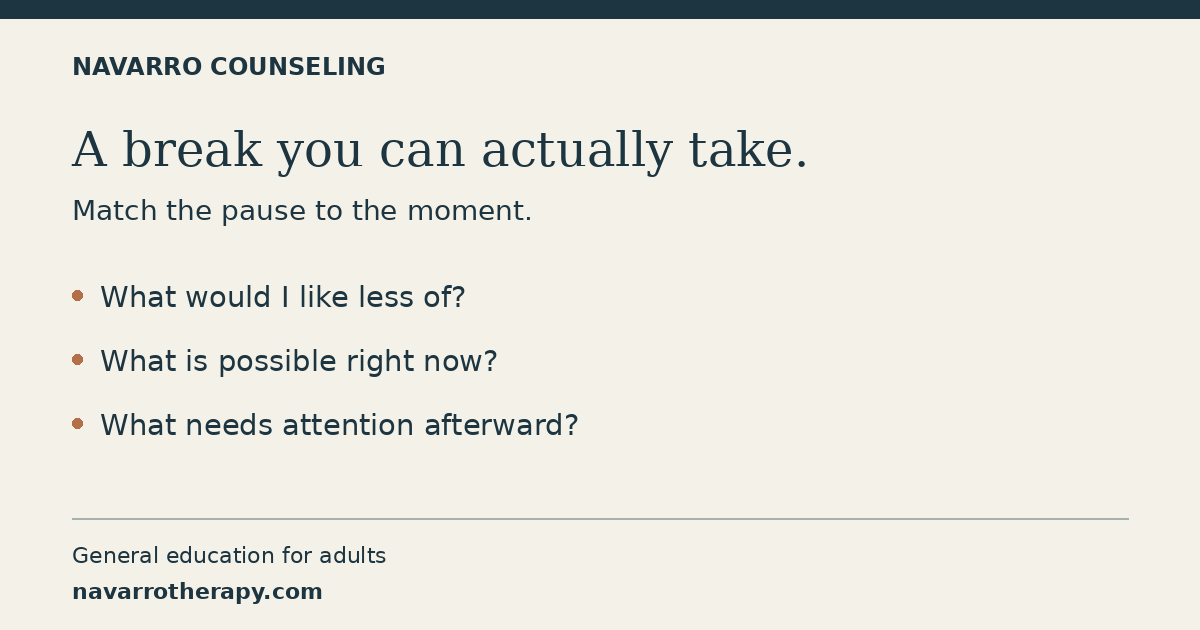
A break can become another item on an already crowded list: find the right activity, do it properly, and feel better before getting back to work. A more modest starting point is to choose one pause that is possible in the situation you are actually in.
The National Institute of Mental Health includes relaxing activities among its self-care suggestions. It gives examples such as music, reading, time in nature and low-stress hobbies, while noting that people differ in what they need and enjoy. The three questions below are original planning examples from Navarro Counseling. They are not a validated assessment or a treatment protocol.
1. What would I like less of for a moment?
Name something concrete rather than asking yourself to fix your whole mood. Perhaps it is noise, another decision, a stream of messages or the pressure to keep solving a problem. This question is an invitation to notice your circumstances, not a way to diagnose what is happening.
For example, someone who has spent the morning responding to messages might choose a few quiet minutes without opening another app. Someone who has been alone and wants company might prefer a short conversation with a trusted person. Neither option is the correct break for everyone.
2. What is possible without creating another problem?
Choose an activity that fits your responsibilities, surroundings and preferences. One song, a few pages of something you enjoy or time beside a window are possible examples. A longer activity can wait for a time when it is practical. The duration is a personal planning choice, not a therapeutic dose.
Keep safety and necessary care in view. If you are driving, supervising a child or doing safety-sensitive work, wait for an appropriate moment or arrange coverage. A pause should not mean leaving someone without needed support. You do not need to buy an app or a product to try an ordinary activity you already enjoy.
3. What needs attention after the pause?
A break can sit alongside a practical next step. You might return to one defined task, ask about a deadline or arrange a conversation about responsibilities. If the same overload keeps returning, a pause does not replace addressing the conditions around it.
Here is an original example: “I have ten minutes before the next appointment. I will listen to one song, then check which message actually needs an answer today.” The plan names both the pause and the return. It does not promise that worry, fatigue or frustration will disappear.
Try one choice, without grading yourself
If useful, complete this sentence: “For this moment, I would like less ____. A possible pause is ____. Afterward, the next thing I will check is ____.” You can change the choice or skip the exercise. If an activity increases distress, stop and choose something more comfortable or seek support.
You do not have to feel calm to have followed the plan. The point of this example is to make a choice that fits your situation, not to pass a test. It is also reasonable to need a longer rest, practical help or a change in demands.
When a short break is not enough
If distress is persistent, severe or interfering with daily life, consider talking with a qualified health professional. General self-care information cannot establish the cause of symptoms or replace individual care. Seek urgent local help for immediate danger.
Source and educational limits
National Institute of Mental Health: Caring for Your Mental Health (reviewed April 2026; checked November 17, 2026). This is established self-care guidance, not a new research announcement. The questions, sentence prompt and scenarios in this article are original examples; they have not been tested as a standalone intervention.
General education for adults, not individual therapy, diagnosis, medical advice or a safety plan. No clinical outcome is promised.

