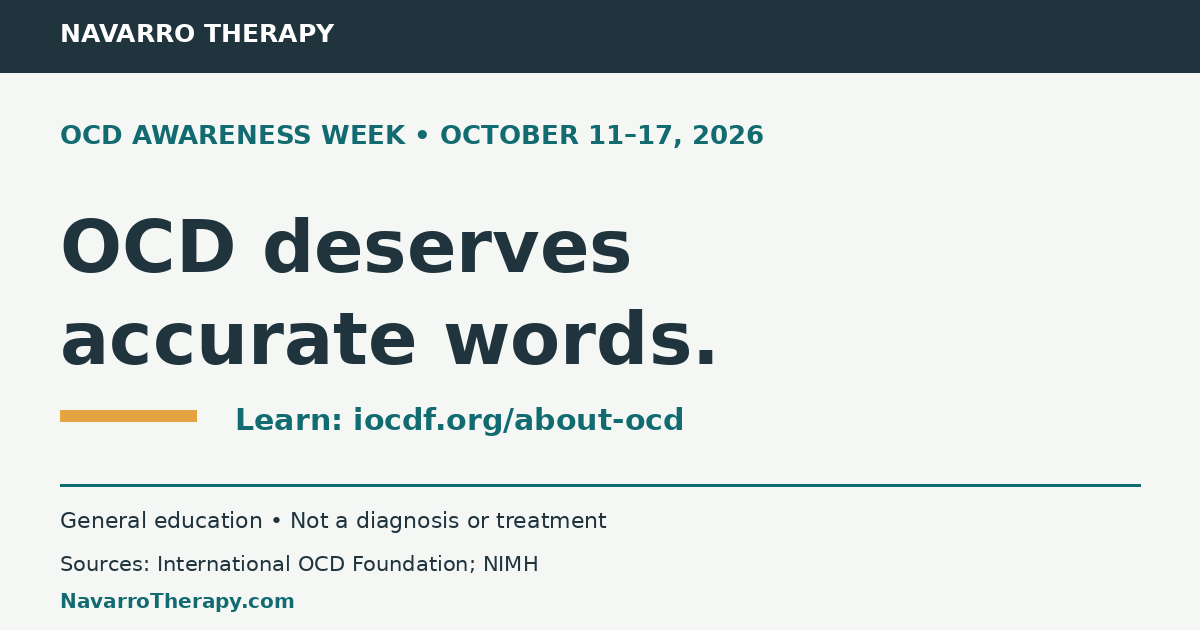
OCD Awareness Week runs October 11–17, 2026. It is an opportunity to replace stereotypes with accurate, respectful information.
Understand the experience
OCD can involve unwanted, intrusive thoughts, images or urges, alongside repetitive actions or mental rituals. These patterns can take up time, cause distress or interfere with daily life. The International OCD Foundation and National Institute of Mental Health explain these experiences as obsessions and compulsions.
A preference for organised shelves alone does not establish OCD. An occasional unwanted thought is not enough to establish a diagnosis either. The pattern, context and impact matter; a social post cannot assess them for an individual.
One useful action: choose accurate words
When you mean that you like an organised desk, describe that preference directly rather than using OCD as shorthand. This is a practical language example, not a diagnostic test.
If a pattern is distressing or disrupting everyday life, a qualified professional can help assess what is happening. For a starting point, read the IOCDF introduction to OCD. There is no need to disclose personal symptoms in public comments.
Sources
International OCD Foundation: OCD Awareness Week 2026 — event dates verified October 14, 2026.
International OCD Foundation: About OCD and NIMH: When Unwanted Thoughts or Repetitive Behaviors Take Over — clinical education consulted October 14, 2026. These are educational reference pages, not a newly released study.
General adult education, not an assessment or individual treatment. Reading this post does not create a therapist-client relationship. Consult a qualified professional for advice about your own care.

