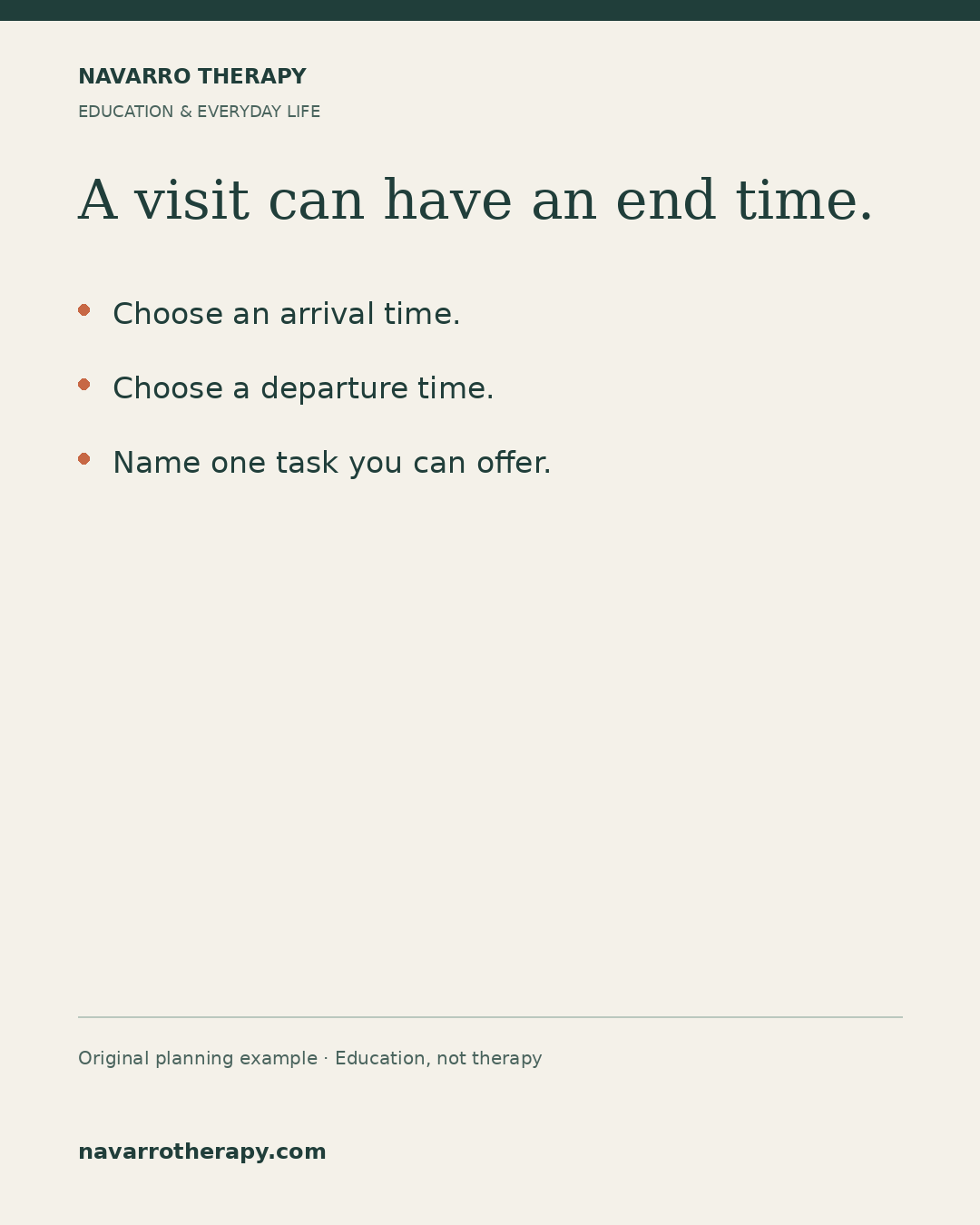
An invitation can sound like one decision: yes or no. In practice, it may contain several different requests: travel, a long visit, an overnight stay, food preparation or an extra errand. Before answering, it can help to name what is actually being requested and what you are able to offer.
This article offers a planning exercise for ordinary situations where it is safe to set a limit. It is not a treatment protocol, a test of your relationships or a rule that direct confrontation is always the best choice.
1. Decide the shape of the visit
Write down a realistic arrival and departure time. Consider whether the invitation includes travel, hosting or recovery time afterward. The goal is a concrete description of your availability, rather than a judgment about whether you care enough.
For example: “I can come for lunch from noon to two.” That sentence makes a specific offer. It does not promise to stay until everyone else leaves. If you need time to check existing commitments, a holding response can be equally specific: “I’ll check the plan and reply tomorrow afternoon.”
These are original examples to adapt. They do not guarantee agreement, approval or less discomfort. Another person may want more time than you can offer.
2. Name the task you are accepting
Separate attending from taking responsibility for the whole occasion. You might be able to bring one dish, help with one pickup or make one phone call. Those are different commitments from cooking for everyone, organizing transport or being available all weekend.
An example is: “I can bring dessert. I can’t coordinate the meal this year.” You do not need to invent a more dramatic reason to make the limit sound legitimate. You can also choose wording that fits your circumstances and culture rather than using a script mechanically.
If you are sharing responsibilities with someone, check the plan with them first. A clear message should describe what you can offer, not assign an unagreed task to another person.
3. Leave room between commitments
Look at the whole day before adding another event. NIMH’s general self-care guidance includes identifying priorities, deciding what can wait, keeping time for relaxing activities and staying connected with supportive people. It does not prescribe a particular holiday timetable.
One practical application is to leave a small open period before or after a visit. That could be ordinary time for a meal, travel, music or doing nothing scheduled. The purpose is to make the plan realistic, not to achieve a perfect routine. You can choose connection and a limit at the same time.
Communicate the plan you can keep
Bring the three decisions together: “I can join lunch from noon to two and bring dessert. I won’t be able to host afterward.” If someone asks for more, you can consider the request without assuming the first answer must disappear. A response might be: “I understand you’d like a longer visit. Two is still my departure time.”
Direct wording is not safe in every setting. Where there is a risk of violence, coercion or retaliation, prioritize safety and individualized support over practicing a sentence from an article. A planning worksheet cannot assess those risks.
The takeaway is one workable plan: when you are available, what you are accepting, and what space remains around it. If distress is interfering with everyday life, consider support from a qualified health professional. There is no need to wait for a holiday to be over before asking for help.
Source and limits
NIMH, Caring for Your Mental Health, reviewed April 2026 and checked November 9, 2026. The source supports general priorities, relaxing activities and social support; the visit-planning exercise and scripts are original editorial examples, not study findings or validated treatment.
General education for adults, not individual therapy, diagnosis, medical advice or a safety plan.

