A phone can become a waiting room with no appointment time. You enter to check one update and remain because the next update might finally make things feel settled. Being informed matters. So does noticing what the checking is asking you to give up.
2026 research in context
A January 20, 2026 preprint by Pal and colleagues used matched Bluesky user groups to study news engagement and language-based well-being indicators. The authors reported mixed patterns, including distress-related expressions and social connection. This was not a randomized clinical trial. Automated language measures are not diagnoses, matching cannot remove every confounder, and one platform does not represent every reader. The findings invite questions about habits; they do not establish a personal screen-time prescription. This is 2026 research, not a study released this week.
Give the next check a purpose
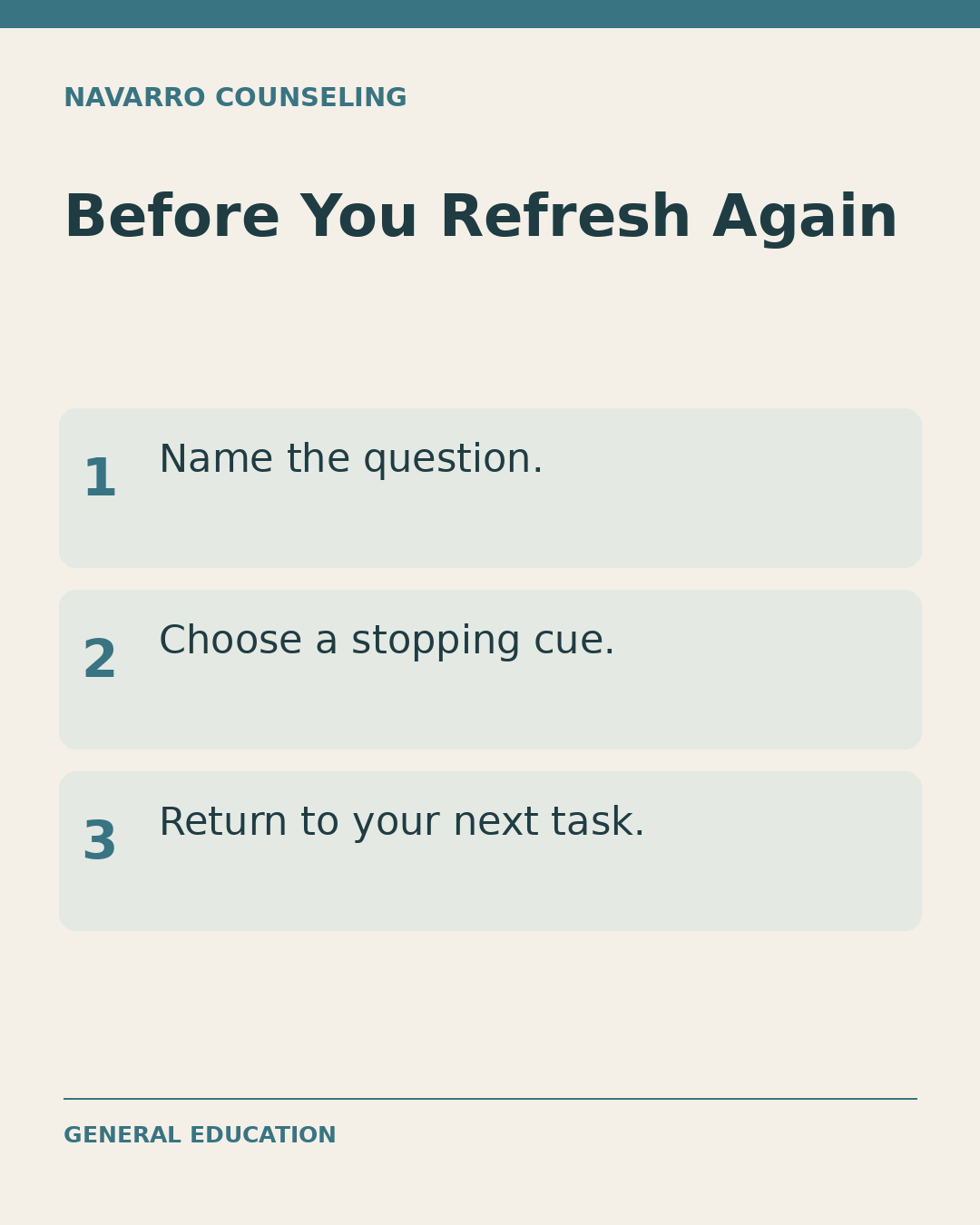
Here is an original reflection exercise, not a tested treatment protocol. Before opening a feed, finish this sentence: I am checking for ____ because my next decision is ____. If you cannot name a decision, you may still choose to read. The difference is making the choice visible rather than letting the refresh button decide for you.
Create a stopping cue
Choose one cue before you start: after one reliable source, after answering one question, or when a calendar reminder signals the next activity. Keep emergency alerts and work or caregiving obligations in view. A rigid rule that ignores your responsibilities is not a useful boundary.
Notice the cost without grading yourself
After the check, privately record whether you learned something actionable and whether you returned to what you intended to do. You do not need to measure every feeling or turn this into another performance task. If a particular routine feels unhelpful, change one part of it and see whether that practical change fits your day.
Keep connection available
An information boundary does not require withdrawing from people or ignoring important events. You might read a short summary, ask a trusted person about a specific issue, or plan a conversation away from the feed. The aim is a more deliberate relationship with information, not perfect calm or permanent certainty.
When to widen the support
If worry or checking persistently disrupts sleep, work or relationships, bring that specific pattern to a qualified professional. NIMH distinguishes stress linked to an external demand from anxiety that can remain without an immediate threat. A social post or timer cannot tell you whether a disorder is present.
General education and author perspective, not diagnosis, treatment or a therapist-client relationship. If immediate safety is at risk, use local emergency services. No clinical benefit is promised.
References
Pal et al. (2026), preprint, submitted January 20
NIMH, stress and anxiety fact sheet; accessed October 25, 2026

